Engineering
Operations
Quality
Companies
Founders
Learn
The book
Company
Get in touch
Offshore Development · Vision 2030
Vision 2030's Missing Engineers: How Ethical Offshore Teams Help Saudi Companies Deliver

Girmairi Team · Aug 7, 2026 · 9 min read
Saudi Arabia's Public Investment Fund is running the most ambitious build program on Earth. Its assets under management roughly doubled to about $925 billion in 2025, with a stated target of $2.67 trillion by 2030. Its portfolio now spans more than 95 companies across 13 strategic sectors, and its five wholly-owned giga-projects — NEOM, Red Sea Global, Qiddiya, Diriyah, and ROSHN — are moving from construction toward commercial operation between 2026 and 2029. Public reporting credits PIF and its companies with creating over 760,000 direct and indirect jobs.
Every one of those numbers has software underneath it. Smart-city platforms at NEOM. Booking, hospitality, and operations systems at Red Sea Global and Qiddiya. Property technology at ROSHN. Digital government, fintech, logistics, and e-invoicing systems across the wider economy. Vision 2030 is usually described as a construction program. It is equally an engineering program — and that is where the math gets hard.
The engineering math behind Vision 2030
The demand side is enormous. Giga-project contract awards reached roughly $196 billion in 2025 alone, and NEOM alone is expected to generate more than 50,000 direct and indirect tech jobs by 2030. Industry analyses project demand for around 150,000 additional technology professionals in the Kingdom by 2030.
The supply side cannot keep up — not because Saudi talent isn't good, but because no country could graduate engineers at that pace. Recent reporting describes a 20 percent shortfall between open tech roles and qualified local candidates, with AI engineers, cloud architects, and data specialists hardest to find. One widely cited projection puts the Kingdom's overall skilled-worker gap at 663,000 people by 2030, with over $200 billion in unrealized revenue attached to it. Salaries for scarce roles keep climbing, and even companies with budget report that they simply cannot hire fast enough.
For a Saudi CEO or CTO building under Vision 2030, this is the daily reality: the roadmap is funded, the deadline is real, and the engineering seats are empty.
Saudization and offshore teams are not enemies
The reflexive worry about outsourcing in Saudi Arabia is that it works against Saudization. Done badly, it can. Done properly, the two are complements, and the leading Vision 2030 organizations already operate this way: Saudi talent leads — product direction, architecture decisions, stakeholder management, and the roles that build the Kingdom's long-term capability — while global delivery capacity fills the seats that cannot be filled locally this year.
- Local leadership, global capacity. A Saudi product owner with an offshore build team ships faster than an empty org chart waiting for perfect local hires.
- Training, not just delivery. A good offshore partner pairs delivery with mentoring for local junior engineers — code review, architecture sessions, real production exposure. Offshore capacity becomes a bridge to local capability, not a substitute for it.
- Budget arithmetic. Flat, predictable offshore rates free budget for the senior local hires that matter most.
What "ethical offshore" actually means
Cheap outsourcing has burned enough Saudi companies that the word deserves scrutiny. The difference between an offshore team that delivers and one that disappears is structural, not luck. Before signing with any partner, ask five questions:
- Who employs the engineers? Full-time employees in a managed office are accountable. Anonymous freelancers are not.
- Who do you contract with? A contract with a US or similarly regulated entity — with NDA and IP assignment under that law — is enforceable. A contract with an unknown shell is a hope.
- How are engineers paid and treated? Teams paid fairly, with real career growth, stay. Attrition is the hidden cost that kills offshore projects.
- Is the pricing flat and honest? Flat monthly rates per seat make budgeting possible and remove the salary games that poison cost-plus arrangements.
- Who do you talk to when something breaks? A named delivery manager and a monthly report in plain words — or silence until the invoice.
Why Bangladesh works for Saudi companies
Most Saudi organizations default to the saturated offshore markets and inherit their problems: poached talent, high churn, rising rates. Bangladesh is the market the world hasn't caught up to yet — strong engineering universities graduating thousands of capable engineers a year, one of the most active competitive-programming communities anywhere, and far less global competition for its best people.
For Saudi Arabia specifically, the practical details line up. Dhaka is two hours ahead of Riyadh — a full working-day overlap, no midnight standups. The workweek difference is manageable and planned around. And the cultural context — a Muslim-majority, hard-working engineering culture with deep respect for Gulf partnerships — makes day-to-day collaboration easier than most east-west arrangements.
Where offshore seats fit first
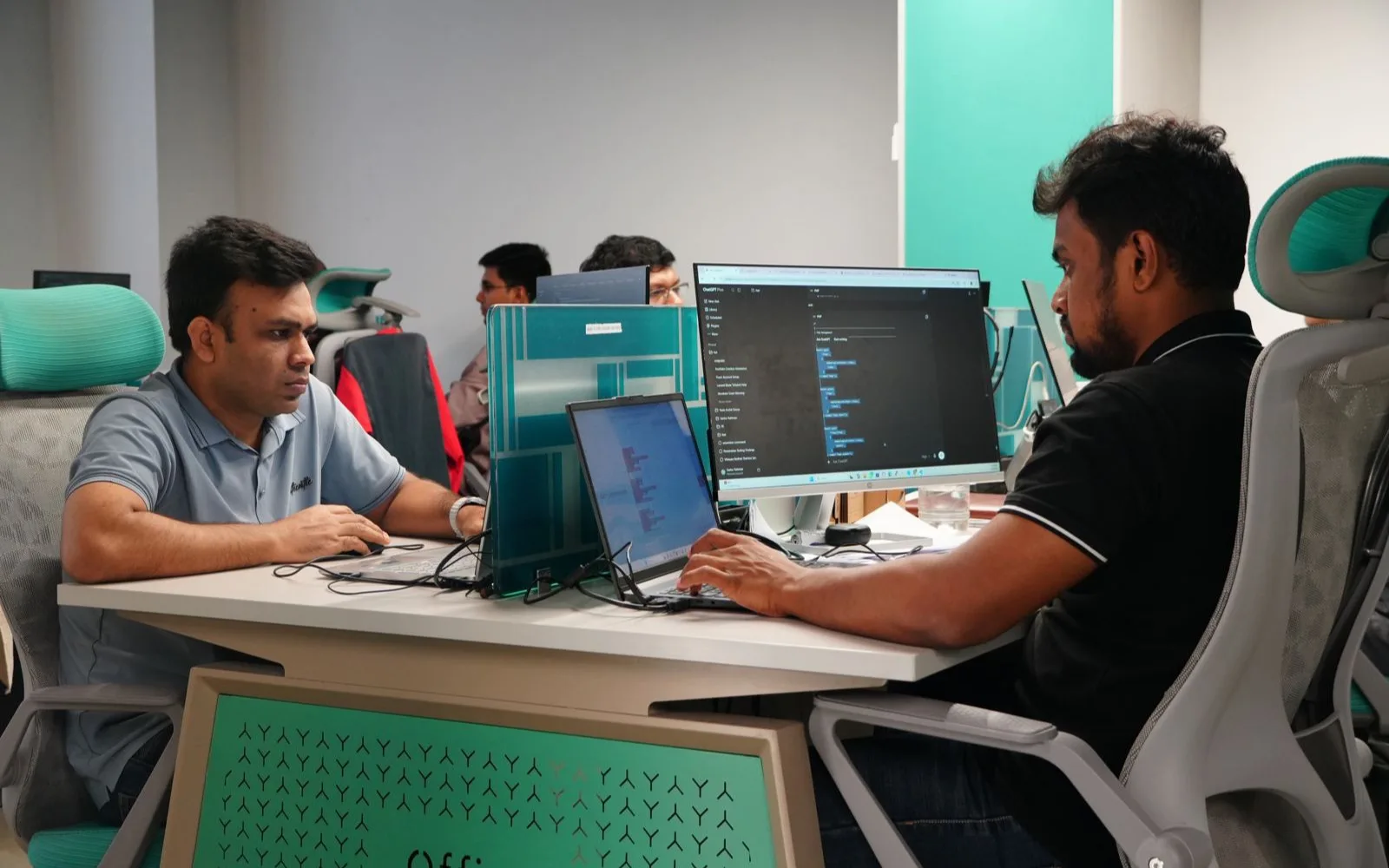
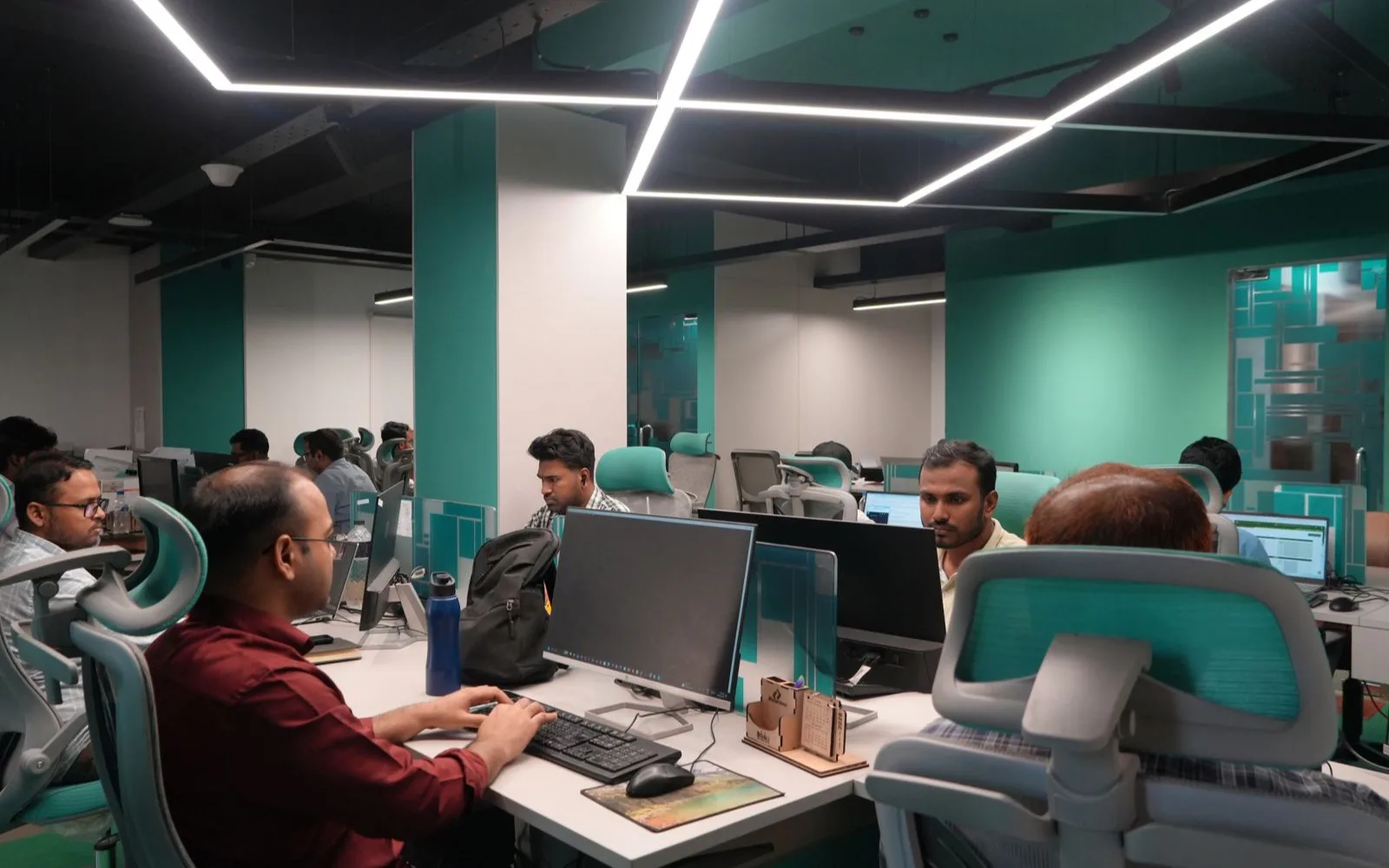
Across Vision 2030-aligned companies, the same roles are hardest to fill and best suited to dedicated offshore seats: backend engineers for platforms and integrations, data engineers for the analytics layer every giga-project runs on, QA automation to keep releases safe, DevOps and cloud engineers for the infrastructure underneath, and mobile teams for the consumer apps. These are exactly the seats we staff from our managed office in Dhaka — vetted engineers, full-time, on one US contract, at flat monthly rates.
The bottom line
Vision 2030 will not slow down to wait for the talent market. The companies that deliver will be the ones that combine Saudi leadership with reliable global engineering capacity — chosen carefully, structured ethically, and managed like their own. That is the model we built Girmairi around: a US company, an owned engineering office in Dhaka, and teams that Saudi and Gulf organizations can put behind their roadmaps this quarter, not next year.
If you're building under Vision 2030 and the seats are empty, see our rate card or book a call — we'll show you vetted candidates from our pipeline.
More on Offshore Development
All articles →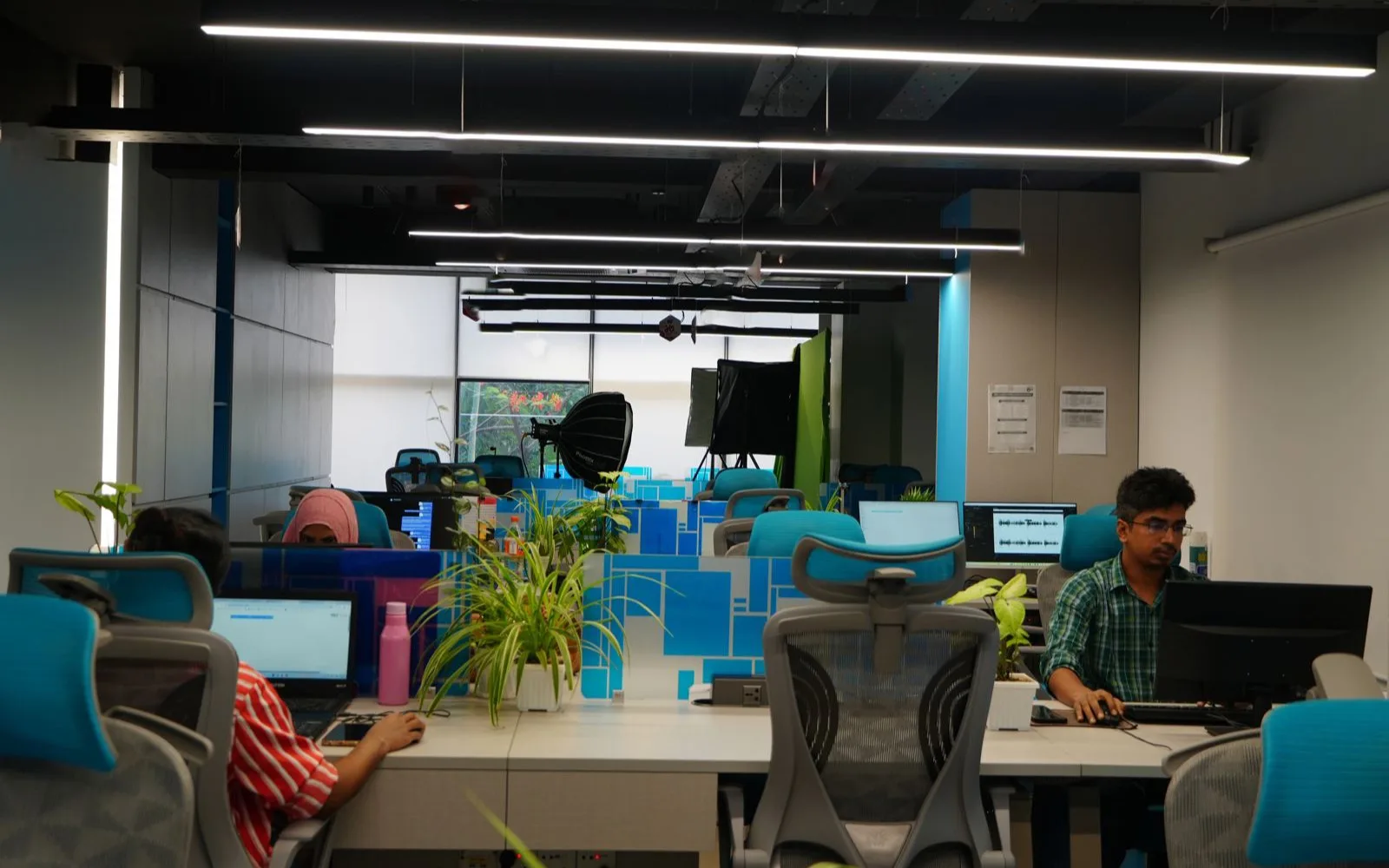
Why Your Offshore App Looks Finished but Feels Broken
Your offshore app looks finished in the demo but breaks for real users. Learn the six signs and the simple tests non-technical founders can run bef…

Saba Mahjamin
Aug 16, 2026 · 10 min read
How to Review a Software Demo Without Understanding Code
A practical software demo checklist for non-technical founders. Test real user flows, mobile behavior, errors, data, and integrations without revie…

Shusmoy Chowdhury
Aug 16, 2026 · 13 min read
12 Questions to Ask Your Offshore Development Team Weekly
Stop asking your developers, “How is it going?” Use these 12 weekly questions to uncover real progress, blockers, risks, testing, and decisions.
Saba Mahjamin
Aug 16, 2026 · 12 min read