Engineering
Operations
Quality
Companies
Founders
Learn
The book
Company
Get in touch
Teams/ML
ML engineers
Models, pipelines, and the judgment to know when each is worth building. Dedicated ML engineers working from our Dhaka office, on your stack and your hours — on one US contract, at flat monthly rates.
eval · run comparison
baseline
current — improved
held-out set — steady
pipeline · nightly
01data prepared → cleaned, versioned
02model run → complete
03evals passed → gate cleared
04deployed → live behind API
05GET /v1/generate → 200 · 18ms
Demos are easy. Trust is the hard part.
Anyone can wire a model into a demo now. The engineering is in what comes after: framing the problem, cleaning the data, building evals you believe, and serving it fast enough to use. That’s what we vet for — and every seat comes with a senior review culture around it.
Problem framing
The first question is whether you need a model at all. A good ML engineer will tell you when a rules engine or a prompt is enough — and save you months.
Data quality
Models inherit the flaws of their data. Cleaning, labeling, and versioning are unglamorous, and they decide whether anything downstream works.
Evaluation before scale
A demo proves a model can work once. An eval suite proves it keeps working. We look for engineers who build the eval before they scale the model.
Serving & latency
A model that answers slowly is a model nobody uses. Batching, caching, and streaming are part of the job, not an afterthought.
Monitoring drift
The world changes and models quietly rot. Good ML work includes watching production outputs so the decay shows up in a dashboard, not a complaint.
The stacks we staff.
Tell us what you run — we match from our pipeline. These are the ML stacks we most commonly place.
| Stack | What we use it for | Where it shows up |
|---|---|---|
| PyTorch | Training, fine-tuning, custom models | Deep-learning work of any kind |
| LLM APIs (Claude / OpenAI-class) | Assistants, extraction, generation | Products adding AI features |
| RAG stacks | Embeddings and vector stores over your data | Search, support, internal knowledge |
| Fine-tuning workflows | Adapting models to your domain | When prompting stops being enough |
| MLOps | Experiment tracking, model registries | Teams past the notebook stage |
| Serving — FastAPI, batching | Models in production behind an API | Anywhere a model meets users |
What you'll see on Bangladeshi ML CVs.
Certifications aren't how we vet — our pipeline is. But they show what serious candidates here train for. Behind them sits an engineering-school pipeline — BUET, University of Dhaka, NSU and others — and a competitive-programming culture that builds deep Python fundamentals.
| Credential | Source | What it signals |
|---|---|---|
| AWS Machine Learning — Specialty | Amazon | ML on cloud infrastructure |
| AI-102: Azure AI Engineer | Microsoft | Building AI services on Azure |
| DeepLearning.AI specializations | DeepLearning.AI / Coursera | Structured deep-learning fundamentals |
| Kaggle participation | Kaggle | Applied modeling under real constraints |
| Research reproduction work | Public repositories | Can read a paper and make it run |
How we vet an ML engineer.
Five stages before you meet anyone — and you still interview last and make the final call. Nobody joins your team without your sign-off.
- 1Problem-framing conversation
- 2Live evaluation-design exercise
- 3Python and data depth
- 4System review of real work
- 5English & communication screen
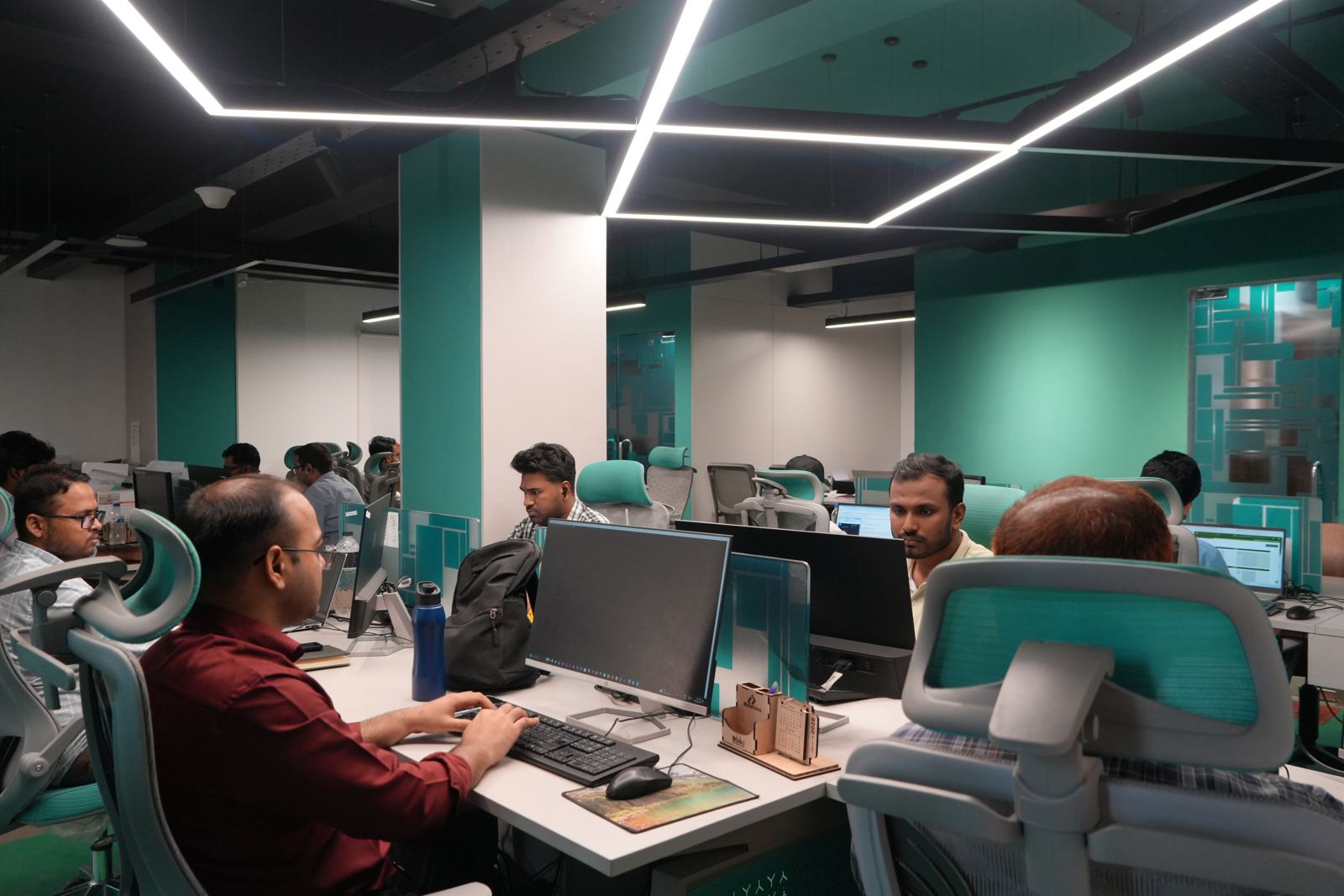

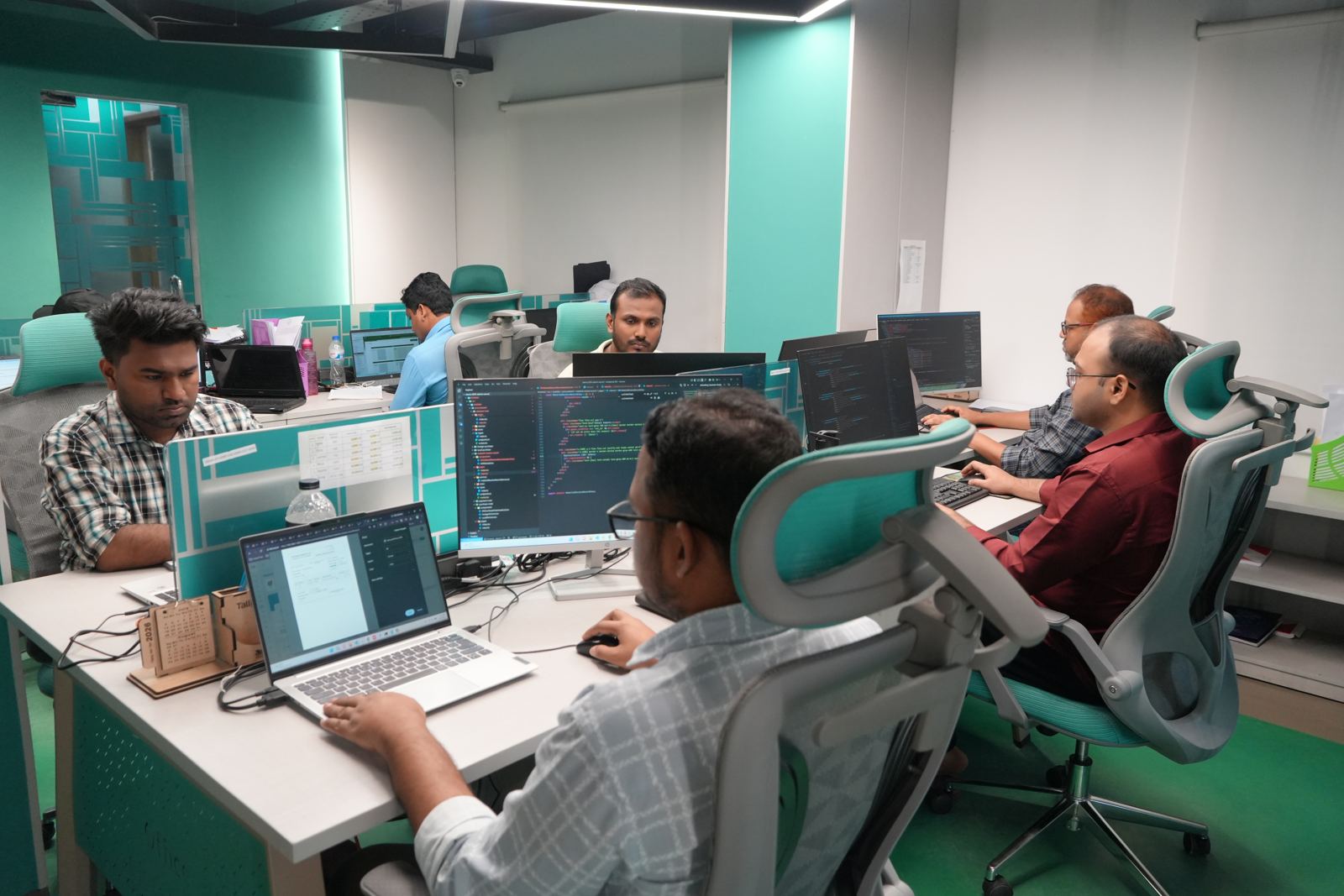
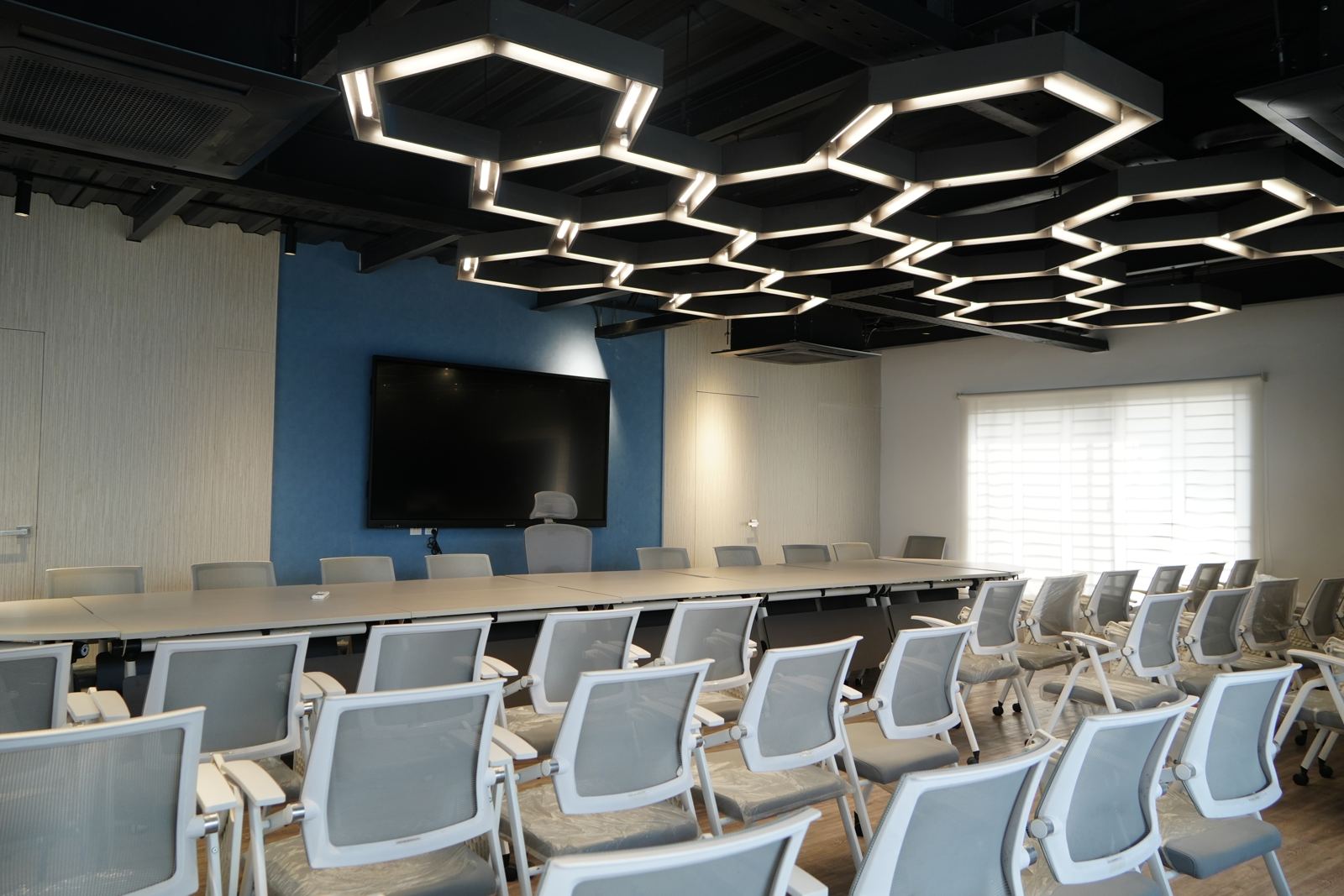
Our office in Dhaka — where your team sits. Real photos, real people.
Frequently asked questions
Girmairi's dedicated ML engineering seats start at $3,000 per month for a mid-level engineer, $4,300 for a senior, and $5,200 for a lead; junior seats are available on request. The rate is flat, billed monthly in advance in USD, and includes office, equipment, HR, management, and a replacement guarantee. The full rate card is on the pricing page under Data & AI.
Yes. Girmairi staffs full-time ML engineers who work on your stack and your hours — integrating LLM APIs, building RAG over your data, fine-tuning models, and serving them in production behind an API. You interview every candidate and make the final call before anyone joins your team.
Girmairi vets evaluation-first: candidates go through a problem-framing conversation, a live evaluation-design exercise, Python and data depth checks, a system review of real work, and an English screen. We look for engineers who build the eval before they scale the model — and you still interview last and make the final decision.
You contract with Girmairi LLC, a US company — one contract, one monthly invoice in USD, billed in advance. NDAs and IP assignment are signed before any work begins, so everything the engineer builds is yours.
Girmairi's ML engineers are full-time and work from the company's managed office in Dhaka — not scattered freelancers. Each engineer is dedicated to one client and works your hours on your stack.
Every seat comes with a replacement guarantee. If an engineer isn't working out, tell us and we replace them from our pipeline — a bad fit is Girmairi's cost, not yours.
Yes. Every client company gets one hour per month with Girmairi's founder — a working CTO — included at no extra cost. That hour is a natural place to pressure-test whether a problem needs a model at all, and how to evaluate one before scaling it.
No — deliberately. The published rate is the rate for everyone. Rates stay flat per seat, by seniority, with the same includes on every seat.
ML seats are on the standard rate card.
Same flat monthly rate, same includes — office, equipment, HR, management, replacement guarantee.