Engineering
Operations
Quality
Companies
Founders
Learn
The book
Company
Get in touch
Teams/QA Automation
QA automation engineers
Test suites that catch bugs before your customers do. Dedicated QA automation engineers working from our Dhaka office, wired into your CI and your hours — on one US contract, at flat monthly rates.
ci · test-run
01auth.spec.ts ✓ 12 passed · 8.4s
02checkout.spec.ts ✓ 21 passed · 14.2s
03api.spec.ts ✓ 34 passed · 5.1s
04retries 0 · flaky 0
05report uploaded → ci artifacts
06suite green · safe to ship
E2E
passing
API
passing
Visual
stable
The difference between shipping fast and shipping scared.
Without automated tests, every release is a gamble and every refactor is a risk. Good QA automation engineers give your team a green light it can actually trust — so you ship on a Friday without holding your breath. We vet for judgment about what to test, not just tool fluency.
Test strategy
Deciding what to test, at which layer, and what to skip. A suite without a strategy is just slow noise.
E2E coverage that stays fast
Critical user journeys covered end to end — and a suite that still finishes in minutes, not hours.
API & contract tests
Most bugs live below the UI. Testing at the API layer catches them earlier and runs far cheaper.
Flake discipline
A flaky test is worse than no test — the team stops trusting green. Stable selectors, real waits, zero tolerance for retries-as-a-fix.
CI integration
Tests that run on every push, block bad merges, and report clearly. Automation nobody runs is shelf-ware.
The tools we staff.
Tell us what you run — we match from our pipeline. These are the testing tools we most commonly place.
| Tool | What we use it for | Where it shows up |
|---|---|---|
| Playwright | Modern E2E and component testing | Our default for new web suites |
| Cypress | E2E for JavaScript-heavy frontends | Teams already invested in it |
| Selenium | Cross-browser and legacy coverage | Enterprise apps, older estates |
| Postman / newman | API test collections in CI | Backend and integration coverage |
| supertest | API tests inside the codebase | Node.js services |
| k6 | Load and performance testing | Checkout flows, launch readiness |
| CI reporting | Dashboards, traces, failure triage | GitHub Actions, GitLab, Jenkins |
Credentials & signals.
Certifications aren't how we vet — our pipeline is. But they show what the market here trains for. ISTQB is widespread in Bangladesh, backed by an engineering-school pipeline — BUET, University of Dhaka, NSU and others — and a strong competitive-programming culture. Real suites matter more than paper, so we weight both.
| Credential / signal | Source | What it signals |
|---|---|---|
| ISTQB Foundation Level | ISTQB | Very common here — shared testing vocabulary and basics |
| ISTQB Advanced — Test Automation Engineer | ISTQB | Designing automation architecture, not just writing scripts |
| Real Playwright / Cypress suites | Their own work | The strongest signal — we read the actual code |
| API test collections | Their own work | Comfort testing below the UI, where most bugs live |
| Open-source test contributions | GitHub | Code that survived review by strangers |
How we vet a QA automation engineer.
Five stages before you meet anyone — and you still interview last and make the final call. Nobody joins your team without your sign-off.
- 1Test-strategy conversation
- 2Live automation exercise
- 3Selector and flake-handling depth
- 4Review of a real suite they built
- 5English & communication screen
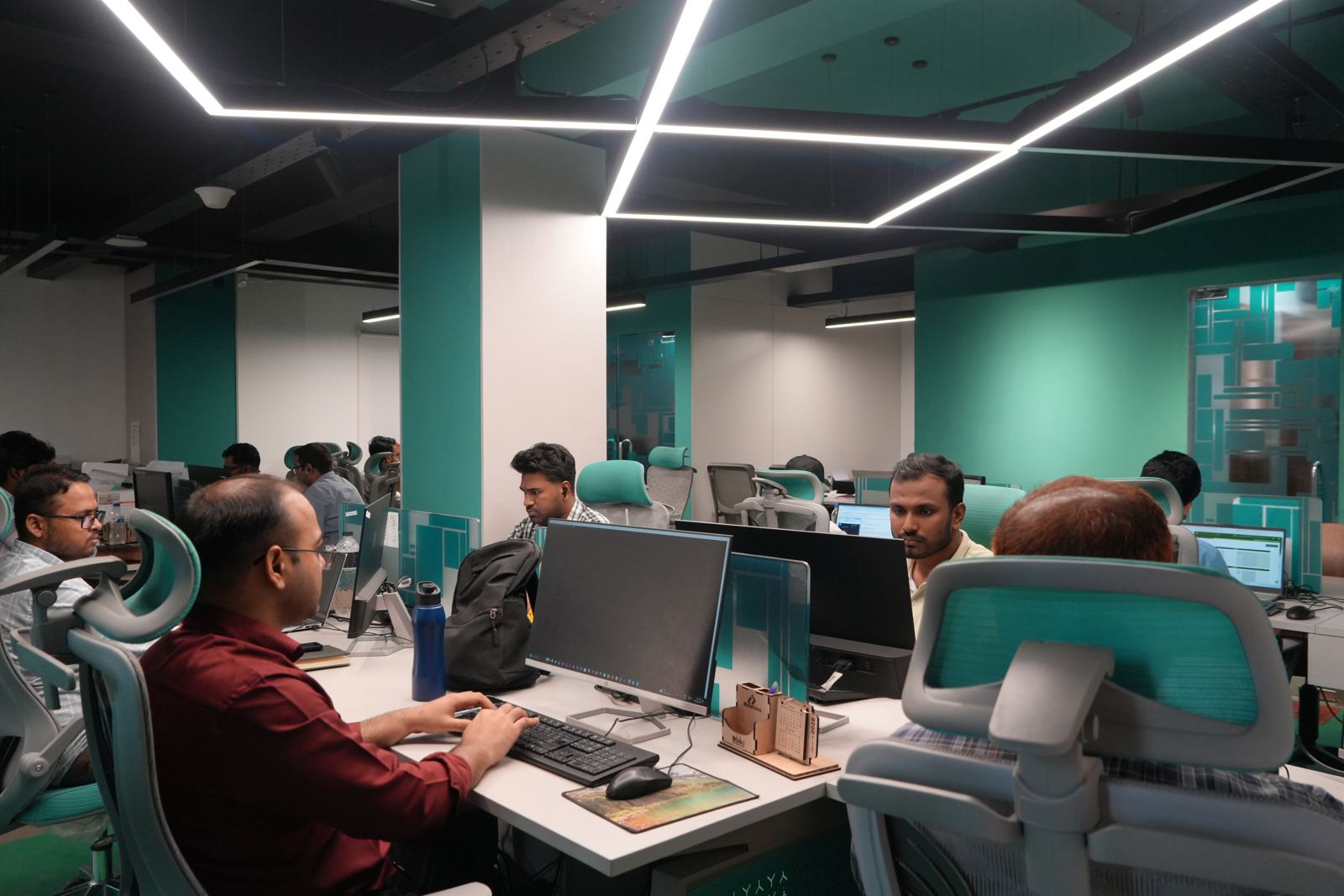

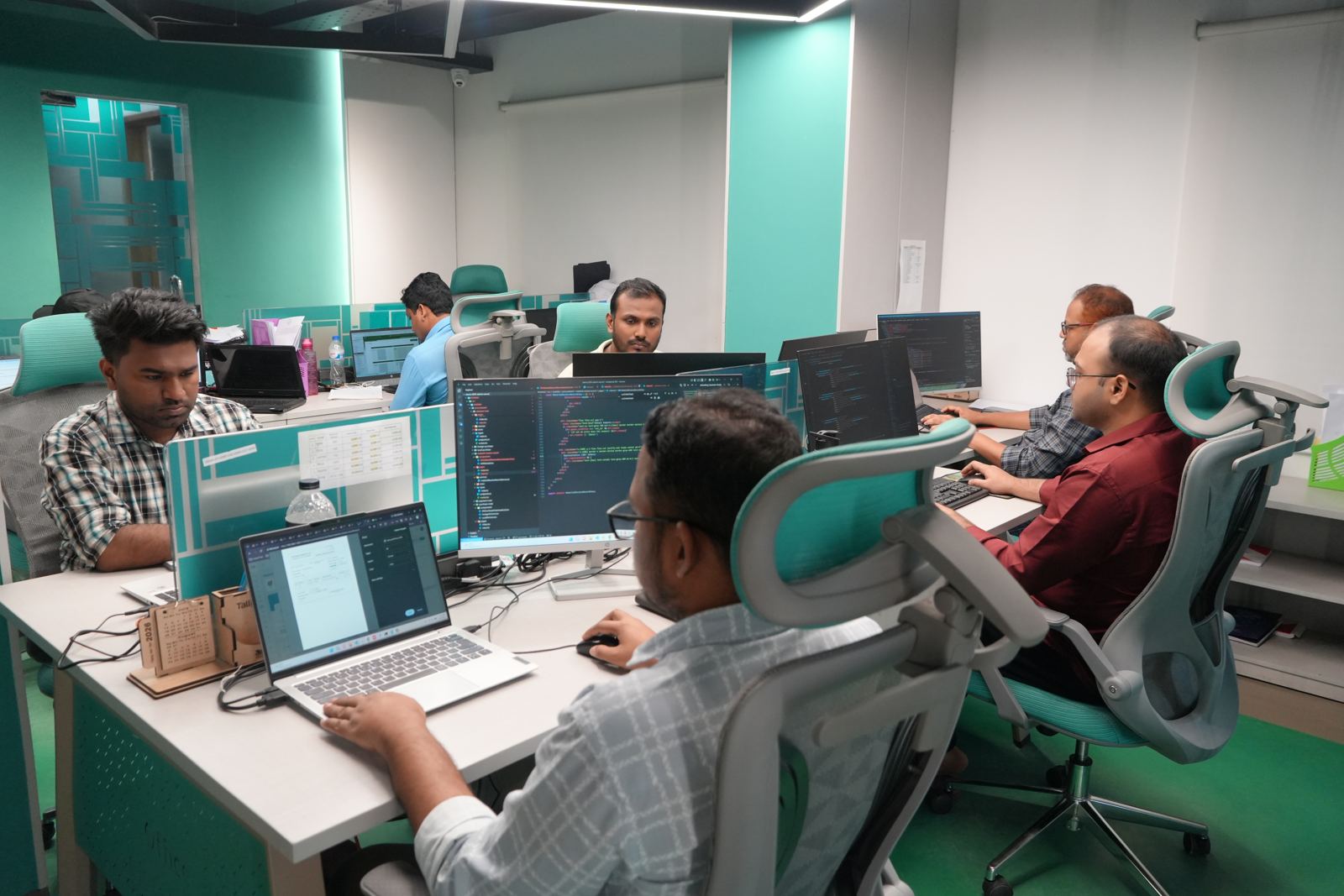
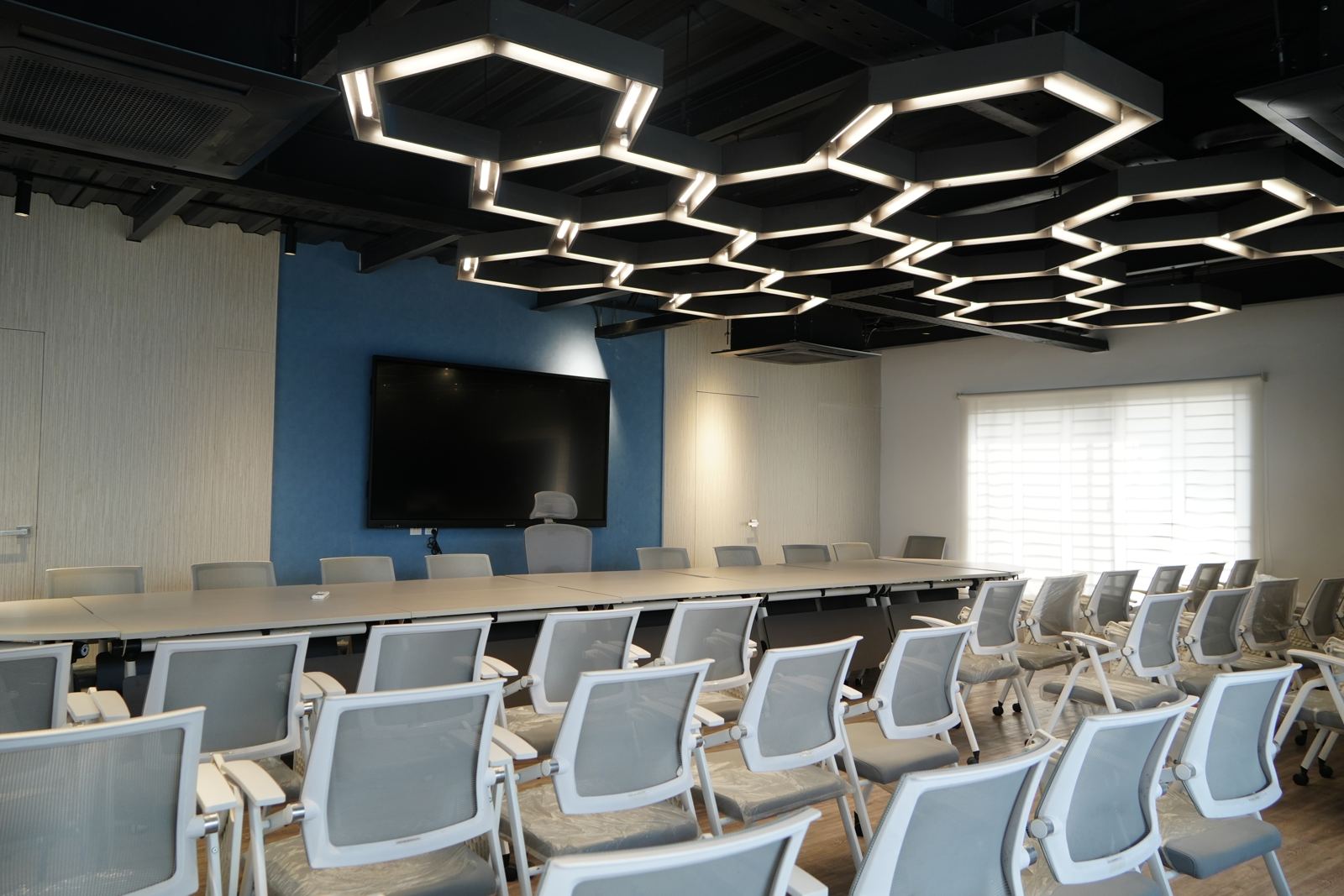
Our office in Dhaka — where your team sits. Real photos, real people.
Frequently asked questions
With Girmairi, a dedicated QA automation engineer is a flat monthly seat: junior from $1,500, mid-level $2,200, senior $3,200, lead $3,800, and staff $4,500 per month. The rate includes the office, equipment, HR, and management, and is billed monthly in advance in USD. The full rate card is at /pricing#quality.
A full-time Playwright or Cypress automation engineer costs $2,200 per month at mid-level and $3,200 at senior level, with leads at $3,800. These are flat monthly rates for a dedicated, full-time engineer working your hours and your CI — not hourly freelance billing.
Girmairi's QA automation engineers are full-time employees working from its managed office in Dhaka — no freelancers or scattered contractors. Each engineer works exclusively for one client, on that client's timezone, Slack, and standups.
Yes. Girmairi vets each engineer first — including a live automation exercise and a review of a real test suite they built — then the client interviews last and makes the final call. Nobody joins the team without the client's sign-off.
The contract is with Girmairi LLC, a US company, so it works like any US vendor relationship: one monthly invoice in USD, billed in advance. An NDA and full IP assignment are signed before any work begins, so the client owns 100% of the test code.
ISTQB certification is widespread among QA engineers in Bangladesh and common in Girmairi's pipeline, including the Foundation and Advanced Test Automation Engineer levels. Girmairi vets on real Playwright, Cypress, and API suites rather than certificates alone, so certifications are a signal, not the bar.
Girmairi replaces the engineer from its pipeline under a replacement guarantee. A bad fit is Girmairi's cost, not the client's.
No — one flat published rate per seat, the same for every client. Every client company also gets one hour per month with Girmairi's founder, a working CTO, included at no extra cost.
QA automation seats are on the standard rate card.
Same flat monthly rate, same includes — office, equipment, HR, management, replacement guarantee.