

UI/UX
7 Important Questions of User Interaction from Don Norman's

Minhazul Abedin
November 22, 2023
5min read
"Anyone using a product should always be able to determine the answer to all seven questions." — Don Norman
1. Discoverability
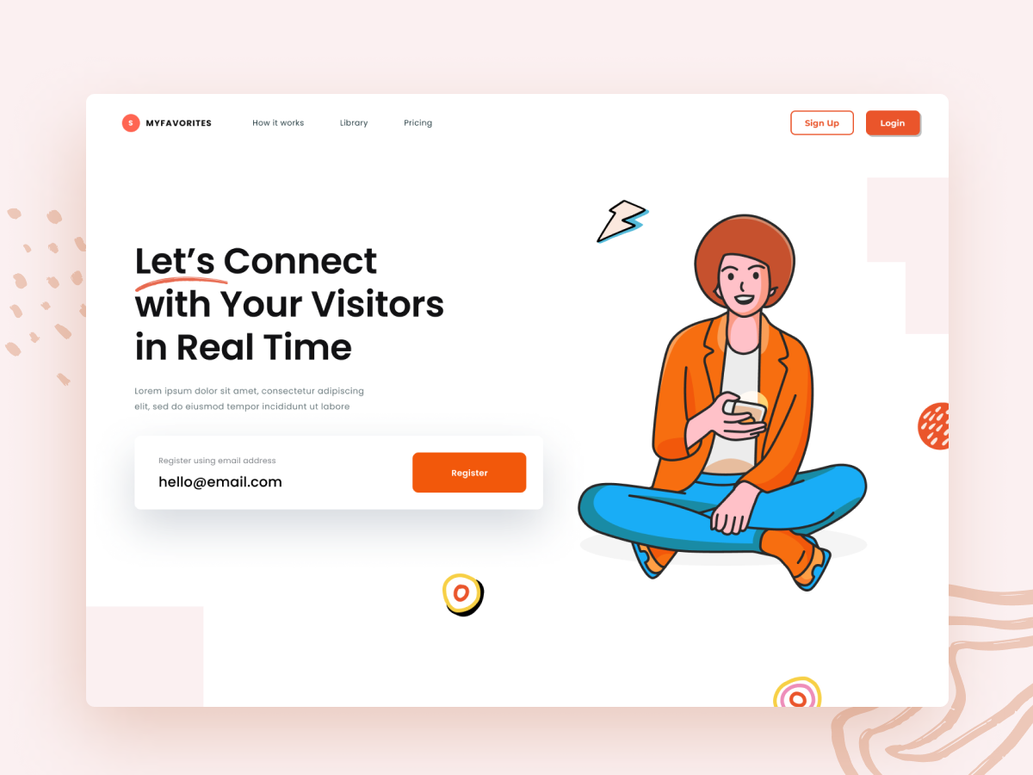
Design by Uplabs. The landing page uses focal points, such as calls to action, images and headers, navigation, visual hierarchy, and spacing. Doing so makes it easier for users to determine the possible actions.
Think about it: every day we come across things like remote controls, websites, and apps, and we just know how to work them. That's because good design makes it easy to find the right button or feature to get the job done. But, if something isn't designed well and we can't find what we're looking for, it can be frustrating. So, let's make sure everything is super discoverable!Norman describes good discoverability as: "it is possible to determine what actions are possible and the current state of the device." Clear focal points (calls to action, images, and headers); visual hierarchy (content structured in order of priority); and transparent navigation systems all constitute good discoverability and understanding within a design.However, when a design lacks discoverability, we must work harder to understand how something works. Take a website hamburger menu, for example; it is a convenient place to store multiple items, but it obscures key offerings and essential information.
2. Feedback
Animation by Sergushkin. Feedback updates users on the status of their plan requests.
In our interactions with everyday objects or products, feedback is crucial to communicate the outcome of our actions. In the absence of immediate feedback, there's a sense of uncertainty regarding the impact of our actions.Norman describes feedback as "some way of letting you know that the system is working on your request." He also explains that feedback must be immediate, informative, discreetly planned, and prioritised.Important information should be immediate and clear. For example, when something goes wrong, an error dialogue forces our attention to critical feedback on what has just happened and what to do next.
3. Conceptual model
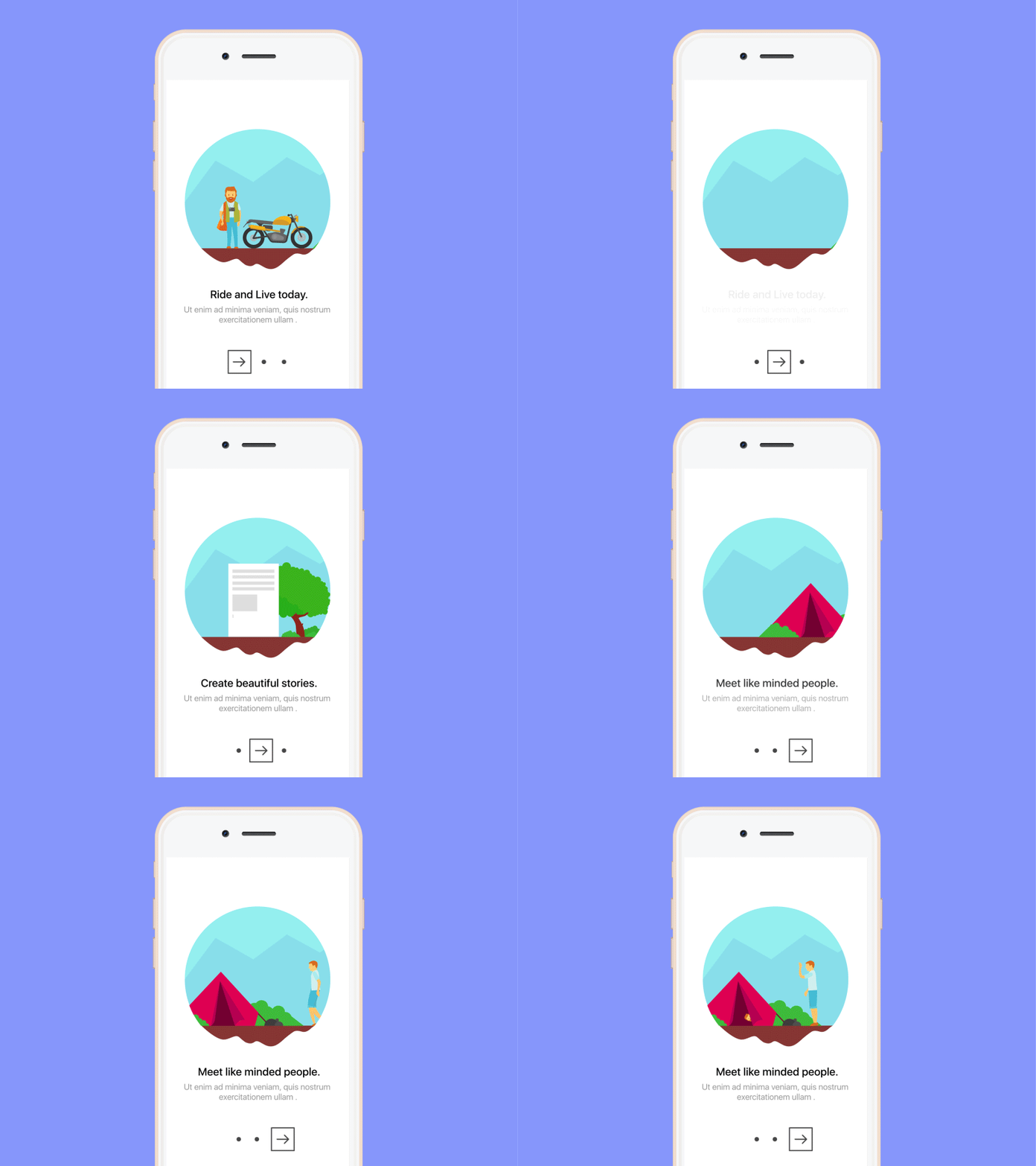
Design by Arun. Onboarding experiences are good examples of how conceptual models can provide users with an explanation of how the product or service works.
A conceptual model is a simple and helpful explanation of how something works. For example, a website or application onboarding experience demonstrates how to use the product or service.Norman explains, "the design projects all the information needed to create a good conceptual model of the system, leading to an understanding and a feeling of control."Conceptual models are used in packaging, instruction manuals, and digital interfaces to help users understand how products work. Visual metaphors are often used, such as the trash can icon for deleting files. When a conceptual model is unclear, it can conflict with users' mental models and expectations, such as a trapezoid-shaped USB connection that doesn't follow a reversible desi
4. Affordance

Design by Sumoyut. The thermostat knob's design suggests what it can do, i.e., turn to increase the temperature.
Affordance is an object's perceived action and properties that help us determine its operation.Norman states, "The term affordance refers to the relationship between a physical object and a person." For example, door handles and pull chain designs relate to their intended action; hence, form follows function.The Versatility of a Chair: A simple chair can serve many purposes. Its primary function is to provide a comfortable place to sit. However, chairs with casters can be easily moved around. In the event of a fire, a chair's size and weight can even be used to break a window.
5. Signifiers
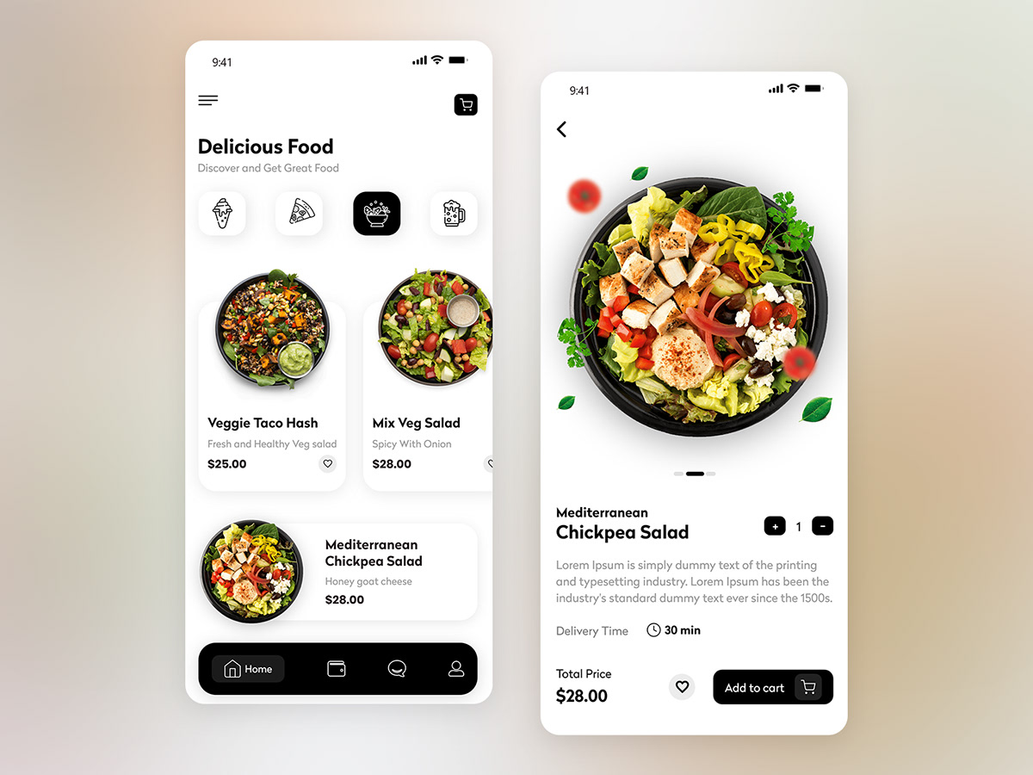
Design by Paresh Sagar. Signifiers, such as buttons and visual cues, tell users where different actions can take place.
A signifier communicates to us where the action should take place.Norman explains, "The term signifier refers to any mark or sound, any perceivable indicator that communicates appropriate behaviour to a person." For example, a button label tells us precisely what action the corresponding control takes.The movie "Penguins of Madagascar" features a scene where an Arctic animal accidentally steps on a big red button. Amidst flashing alarms, a penguin remarks, "They really should put a label on these things."A big red button usually affords that it will perform a critical action, such as an emergency exit. However, in the Penguin's case, there was no clear indication of the true intent of the button.
6. Mapping
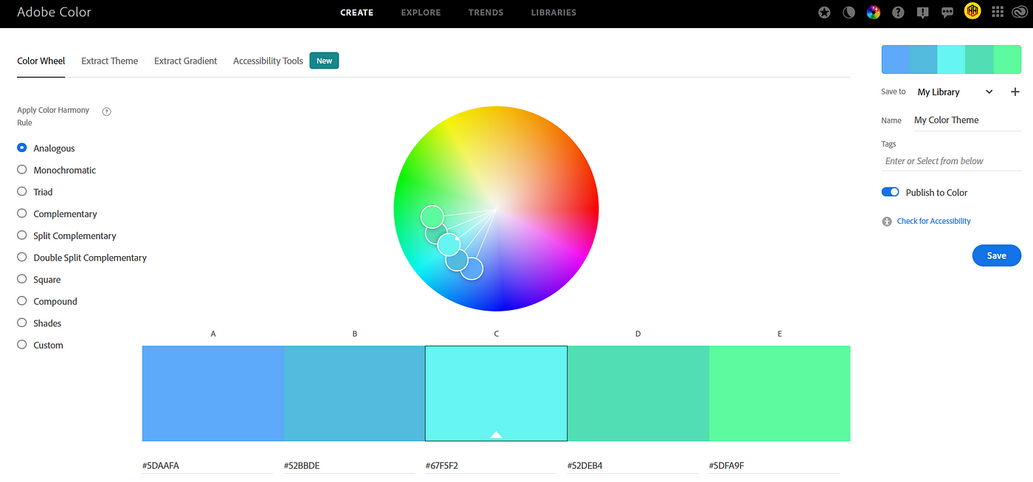
Adobe Color Website. This colour picker depicts the relationship between the controls and the corresponding elements they affect.
Mapping is the relationship between controls and their effect on the world. For example, the arrow buttons on an arcade claw machine correspond to the movements of the toy grabbing mechanical arm.Norman explains, "when mapping uses spatial correspondence between the layout of the controls and the devices being controlled, it is easy to determine how to use them."Natural mapping allows for subconscious manipulation of the world, such as flicking light switches. iOS control centre's sliding bars display good mapping behaviour by communicating the effect of actions. Unclear mapping between controls and their functions, such as a cooker layout, leads to increased cognitive and physical effort.
7. Constraints
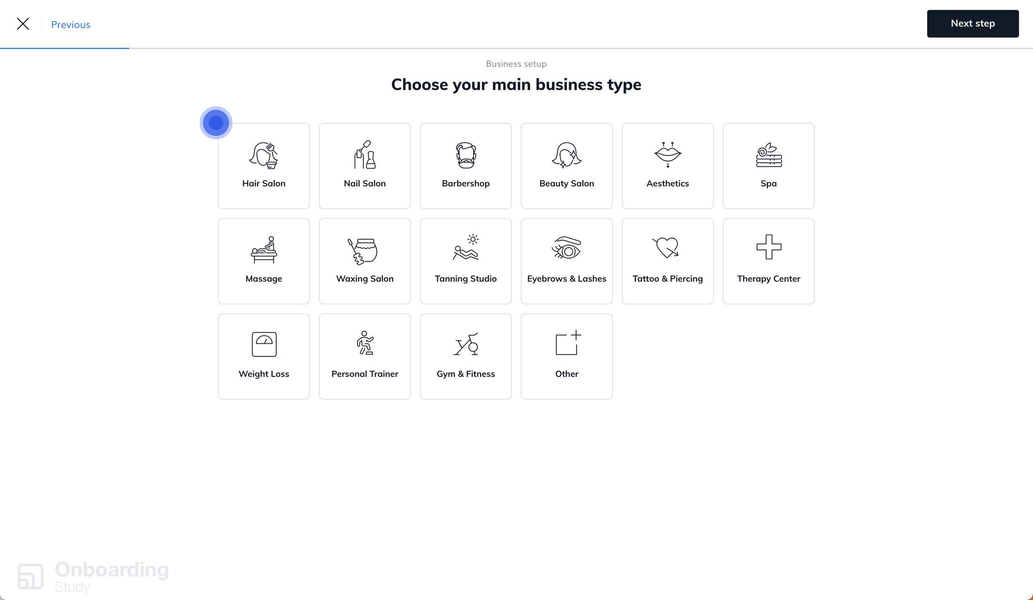
Design by Onboarding Study. A simple process for creating and managing an event. Small steps provide users with enough information to complete one task at a time.
Long forms, complicated layouts, and heavily written descriptions can increase distraction and cognitive load (working memory). Constraints, however, can restrict the kind of interactions that can take place and therefore help reduce the amount of information we process.Norman explains, "physical, logical, semantic, and cultural constraints guide actions and ease interpretation."Different constraints, such as physical, semantic, cultural, and logical, can help focus attention on a task and reduce human error. Physical constraints limit possible operations, semantic constraints provide clues to where actions can be performed, cultural constraints are social conventions, and logical constraints determine alternatives.
Summary
We can apply Norman's design principles as a strategy to communicate our intention for using a product or thing with users. With appropriate application, we can meet people's expectations and enable them to use design efficiently, effectively, and delightfully.
